
Chicago winters are tough on homes. Frequent snowfalls, deep freezes, and constant freeze–thaw cycles create the perfect conditions for ice buildup in gutter systems. One of the most common winter issues homeowners face is blocked drainage caused by ice forming inside gutters or downspouts.
When water freezes inside the system, it cannot drain properly. As snow melts during warmer daytime temperatures, that water has nowhere to go. Over time, it can back up under roofing materials, spill over gutter edges, or pool near the foundation. Left unaddressed, these conditions may lead to roof leaks, fascia damage, siding issues, and foundation concerns. Understanding why this happens — and when to take action — can help limit damage and avoid unnecessary repairs.
Why Gutters and Downspouts Freeze in Winter
Several factors contribute to winter drainage problems, especially in climates like Chicagoland.
Heat Loss From The Home
Warm air escaping through the attic can melt snow on the roof. As that water reaches colder areas near the eaves or gutter system, it refreezes, leading to ice buildup and restricted flow.
Insulation Or Ventilation Issues
Inconsistent roof temperatures increase the likelihood of melting and refreezing. While this is often tied to insulation or ventilation performance, addressing those components typically requires evaluation by a roofing or insulation professional.
Debris Holding Standing Water
Leaves, grit, and roofing debris trap water inside gutters. When temperatures drop, that trapped water freezes, increasing the chance of blocked downspouts and overflow.
Rapid Temperature Swings
Winters frequently shift from above-freezing days to overnight deep freezes. Water that hasn’t fully drained can refreeze quickly, creating solid ice blockages inside the system.
Common Warning Signs of Frozen Gutters and Downspouts
- Icicles forming along gutter edges or rooflines
- Gutters sagging or pulling away due to ice weight
- Water spilling over gutters during mild winter days
- Ice buildup near the base of downspouts
- Ice or staining along the siding and exterior walls
These signs often indicate restricted drainage and should not be ignored.
Dangers of Frozen Gutters and Downspouts
Frozen gutters and downspouts can cause serious damage to your roof, siding, and foundation during winter. If ice blocks your gutters, the water can seep under your roof and cause leaks and damage. Also, when water freezes and then thaws repeatedly, the boards behind your gutters stay wet, which can cause them to rot. When downspouts freeze, water overflows near the foundation, increasing the risk of cracks and basement leaks. Plus, heavy ice buildup can strain gutters and downspouts, potentially causing them to separate or break. If you stop your gutters from freezing, keep them free of debris, and take care of them the right way, you can save your house from expensive harm caused by winter weather.
Ice Dams vs. Frozen Gutters: Understanding the Difference
| Aspect | Ice Dams | Frozen Gutters |
| Where it forms | Develops along the roof edge and inside ice dams in your gutters when snow melts and refreezes | Occurs when ice inside gutters or downspouts blocks normal water flow |
| Main cause | Heat loss creates conditions for ice dams, causing melting and refreezing | Standing water freezes because downspouts can freeze, or gutters are not clean |
| How it affects drainage | Traps water behind the dam, forcing moisture under shingles | Blocks the opening of the downspout, stopping water from draining away |
| Primary risk | Leads to leaks and damage to your roof | Causes overflow, gutter strain, and possible foundation issues |
| Visible signs | Larger ice dams near the roof edge and top of the ice-clogged gutter | Ice buildup along the length of your gutters and near the bottom of downspouts |
| Prevention focus | Improve insulation, prevent ice dams, and manage roof heat | Preventing frozen gutters, keeping gutters clear, and regular gutter maintenance |
| Helpful solutions | Proper ventilation and controlled thaw when needed | Installing gutter guards, keeping gutters clean, and ensuring downspouts are properly installed |
| Safe action tips | Avoid forcing or chipping ice. If ice is causing leaks, overflow, or visible damage, it should be professionally assessed. | Do not directly heat the downspout; homeowners should leave their frozen downspouts alone |
How Frozen Gutters and Downspouts Affect Your Foundation
When gutters and drain pipes are iced up and stop water from flowing correctly, the water cannot go where it should. As snow and ice melt, water runs off and over the full gutters instead of going away from your house. Because drain pipes can freeze, water builds up near the base of the house and seeps into the ground. Repeated freezing and melting cause the ground to expand and contract, which pushes on the walls at the base.
Repeated freezing and thawing can lead to foundation cracks, basement flooding, and long-term structural damage. Also, standing water near the foundation weakens soil support, increasing the risk of structural damage. By making sure gutters are not blocked, taking care of drain pipes, and preventing gutters from freezing early, homeowners can keep the foundation safe and keep the house strong.
Immediate Steps to Take When Gutters Freeze
When gutters freeze, avoid chipping ice aggressively, as this can damage gutters and roof edges. Never use open flames to thaw ice, since this creates serious safety risks.
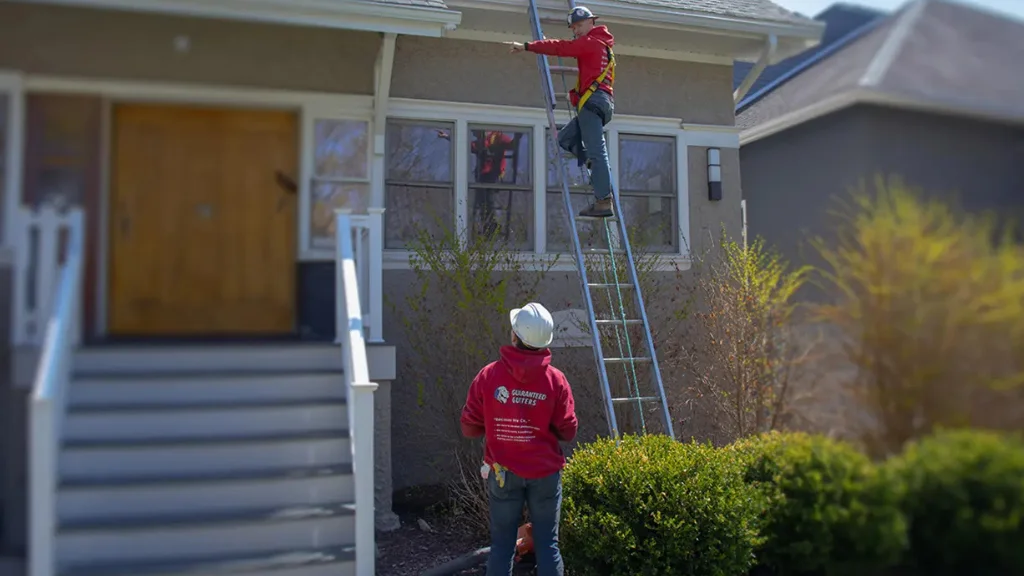
Because we care: winter ladder use and ice removal are dangerous and commonly lead to injuries or property damage.
If ice buildup is heavy or causing overflow or leaks, it is best to have the situation assessed so it can be addressed safely without causing further damage.
Long-Term Solutions to Prevent Frozen Gutters and Downspouts
Keep Gutters Clean
Clear leaves and debris so water can drain properly instead of sitting and freezing inside the system.
Ensure Proper Drainage Setup
Well-positioned gutters and downspouts help move water away from the home before it has time to refreeze.
Address Potential Heat Loss Issues
Inconsistent roof temperatures can contribute to melting and refreezing. If heat loss is suspected, a roofer may need to evaluate insulation or ventilation conditions.
Consider Heated Gutter Or Downspout Systems
In problem areas, heat cables can help maintain water flow during extreme cold.
Schedule Professional Inspections
A targeted inspection can identify drainage issues, installation concerns, and winter-related risks before they lead to damage.
Do Gutter Guards Help in Winter?
Gutter guards can support better winter performance by reducing debris accumulation. Cleaner gutters allow water to move more freely, lowering the chance of ice forming due to standing water. While they are not a complete solution on their own, they can be an effective part of a broader maintenance strategy.
Seasonal Maintenance Checklist for Winter Gutter Protection
| Task | What to Do | Why It Matters |
| Clean gutters before winter | Remove leaves, dirt, and debris from gutters | Keeps gutters clear, allows proper drainage, and helps prevent ice buildup |
| Check downspout flow | Ensure water flows freely through downspouts and away from the home | Reduces freezing risk and prevents water from pooling near the foundation |
| Be aware of insulation-related heat loss | Check attic insulation for gaps or heat loss | Limits snow melt, reduces ice dams, and protects gutters from freezing |
| Schedule professional service | Arrange a seasonal gutter inspection or cleaning | Identifies risks early and helps prevent frozen gutters |
Conclusion
Frozen gutters are a common winter issue in the Chicago area, largely due to harsh weather patterns and frequent freeze–thaw cycles. Recognizing early warning signs, avoiding unsafe DIY fixes, and addressing drainage concerns proactively can help protect your roof, foundation, and exterior throughout the season.
Concerned About Winter Drainage Issues?
If you are seeing ice buildup, overflow, or signs of stress in your gutter system, we can help. Our team offers targeted inspections with clear recommendations and photo documentation, so you understand what’s happening and what to do next — without pressure.
Contact Us