
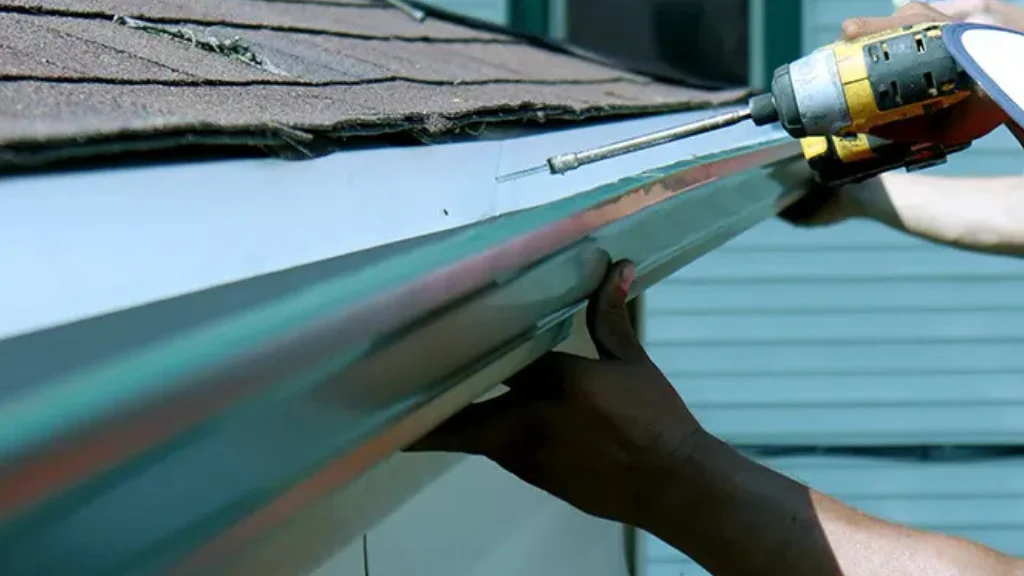
Your gutters might look perfectly level from the sidewalk, but there is actually a secret to how they work. To keep water moving toward your downspouts, every gutter system needs a slight tilt. Many homeowners ask how much slope for gutters is actually required. The answer comes down to a small, precise angle.
Why Do Gutters Have Slope?
If your gutters were perfectly flat, water would just sit in the bottom like a long, thin swimming pool. This causes several problems that can lead to expensive home repairs. The gutter installation must be done with a specific “pitch” to ensure gravity does the heavy lifting for you.
- Prevents Standing Water: A proper slope uses gravity to pull water toward the downspouts so it can drain away from your home.
- Reduces Debris Buildup: Moving water helps carry small bits of dirt and pine needles out of the system. When water stands still, that debris settles and turns into a heavy sludge.
- Protects Your Foundation: When water sits in a sagging gutter, it can overflow. This water may collect near the home and can contribute to drainage issues around the foundation, including an increased risk of water intrusion over time.
- Prevents Extra Weight: Standing water is surprisingly heavy. Just one gallon of water weighs about 8 pounds. Over time, that extra weight causes your gutters to pull away from your house.
- Discourages Pests: Mosquitoes and other bugs flock to standing water. A sloped gutter stays dry between rainfalls, making it a much less attractive home for pests.
The Golden Rule of Gutter Pitch
Calculating the right angle is a bit of a balancing act. If the slope is too flat, the water won’t move. If it is too steep, the water might rush past the downspouts or look crooked against your roofline, hurting your home’s curb appeal.
The standard industry rule is to maintain a downward slope of 1/4 inch to 1/2 inch for every 10 feet of gutter. For example, if you have a 20-foot stretch of gutter, the end with the downspout should be about 1 inch lower than the starting point.
This creates a subtle “pitch” that is effective for drainage but remains nearly invisible to the naked eye. This makes your home look great while staying protected.
So, if you’re wondering what the minimum slope for gutters is, most professionals recommend not going below 1/4 inch per 10 feet. Anything less can result in slow drainage and standing water.
Signs Your Gutter Slope Is Off
You don’t need to climb a high ladder with a level to know if something is wrong. You can usually spot a “sloping” issue from the ground during or after a rainstorm. If you notice any of these red flags, your pitch might need a professional adjustment:
- Standing Water: If it hasn’t rained in two days but you still see water sitting in your gutters, the pitch is likely too flat.
- Spilling Over the Sides: If water pours over the front of the gutter even though there isn’t a clog, the water isn’t moving toward the downspouts fast enough.
- Water Marks or Mold: Look for dark “tiger stripes” or mold on the outside of your gutters. This often means water is regularly backing up and spilling over the edge.
- Sagging Sections: Sometimes the slope was right originally, but a loose bracket has caused a section to dip. This creates a “low spot” where water gets trapped and attracts debris.
The Role of Maintenance and Gutter Guards
Getting the slope right is the first step, but keeping water moving efficiently requires a complete system. In colder climates, a consistent maintenance schedule plays a critical role in preventing blockages and overflow.
The Best Time to Clean Your Gutters
Gutter cleaning frequency can vary depending on the home and surrounding tree coverage, but regular cleanings throughout the year are important for helping the system drain properly.
In many cases, homeowners plan cleanings around key seasonal changes:
- Spring: One cleaning to clear out winter debris.
- Early Fall: One cleaning to catch the first wave of leaves.
- Late Fall: A final cleaning before the deep freeze sets in.
Two fall cleanings can be helpful in areas with heavy leaf drop. Waiting until all leaves have fallen may increase the risk of colder temperatures setting in. When that happens, cleaning can become more difficult and less practical, which may allow debris to remain in the gutters during winter.
How Gutter Guards Help
If you find yourself constantly worried about clogs, you might consider gutter guards. It is important to know that these do not “block” all debris entirely—small particles can still find their way in. However, gutter guards help manage water flow and reduce the need for maintenance.
Why Professional Installation Matters
Setting the pitch can be tricky, especially on older Chicago homes where the roofline or fascia may not be perfectly straight. Aligning gutters with the roofline can create flat spots where water collects.
Professional installation helps ensure the gutter system is aligned correctly and pitched for effective drainage, especially on homes where the roofline or fascia may not be perfectly straight.
Gutter guard installation includes one complimentary inspection after the first winter season. This helps ensure everything is working properly after the snow has melted.
Summary of Key Takeaways
Here’s a simple breakdown to help you get the slope and maintenance right:
| Feature | Recommendation | Why it Matters |
| Standard Slope | 1/4 inch to 1/2 inch per 10 feet | Helps water move toward the downspout more effectively |
| Cleaning Frequency | 3 times per year (Varies by home and tree coverage) | Prevents winter clogs and heavy debris. |
| Gutter Guards | Optional but helpful | Helps manage water flow and reduces maintenance. |
| Professional Pitch | Expert installation | Avoids “invisible” flat spots that cause rot. |
Conclusion
Getting the gutter slope right may seem minor, but it plays a key role in protecting your home. Proper pitch helps water move toward the downspouts more effectively, while regular cleaning, inspections, and related services help support overall gutter performance throughout the year.
Let Us Take a Look
If you have noticed water spilling over your gutters or sections that appear uneven from the ground, our team can help evaluate the system and determine whether slope, buildup, or another issue may be affecting performance
Contact Us